The history of a place: The Hôtel de la Cigogne

Photo : @Adrian Ehrbar

The story goes that in 1901, a winegrower from Dardagny decided to build a small restaurant on the Place Longemalle in Geneva in order to sell his wines more easily. 79 years later, the unique soul of the building seduced Mr. Favre and his wife who saw the potential of the place. Together, they renovated the establishment in 1985, which became a popular meeting place for the inhabitants and visitors of the city of Calvin.  

Located at the entrance to the Old Town of Geneva, a stone’s throw from Lake Geneva, the Hôtel de la Cigogne is ideally situated. Filled with charm, the historic residence contrasts with the bustle and excitement that reign in the city of Geneva every day. Its shaded terrace invites passers-by to take a break and enjoy a moment of relaxation and serenity, on a sunny afternoon or in the calm and privacy of a long summer evening.

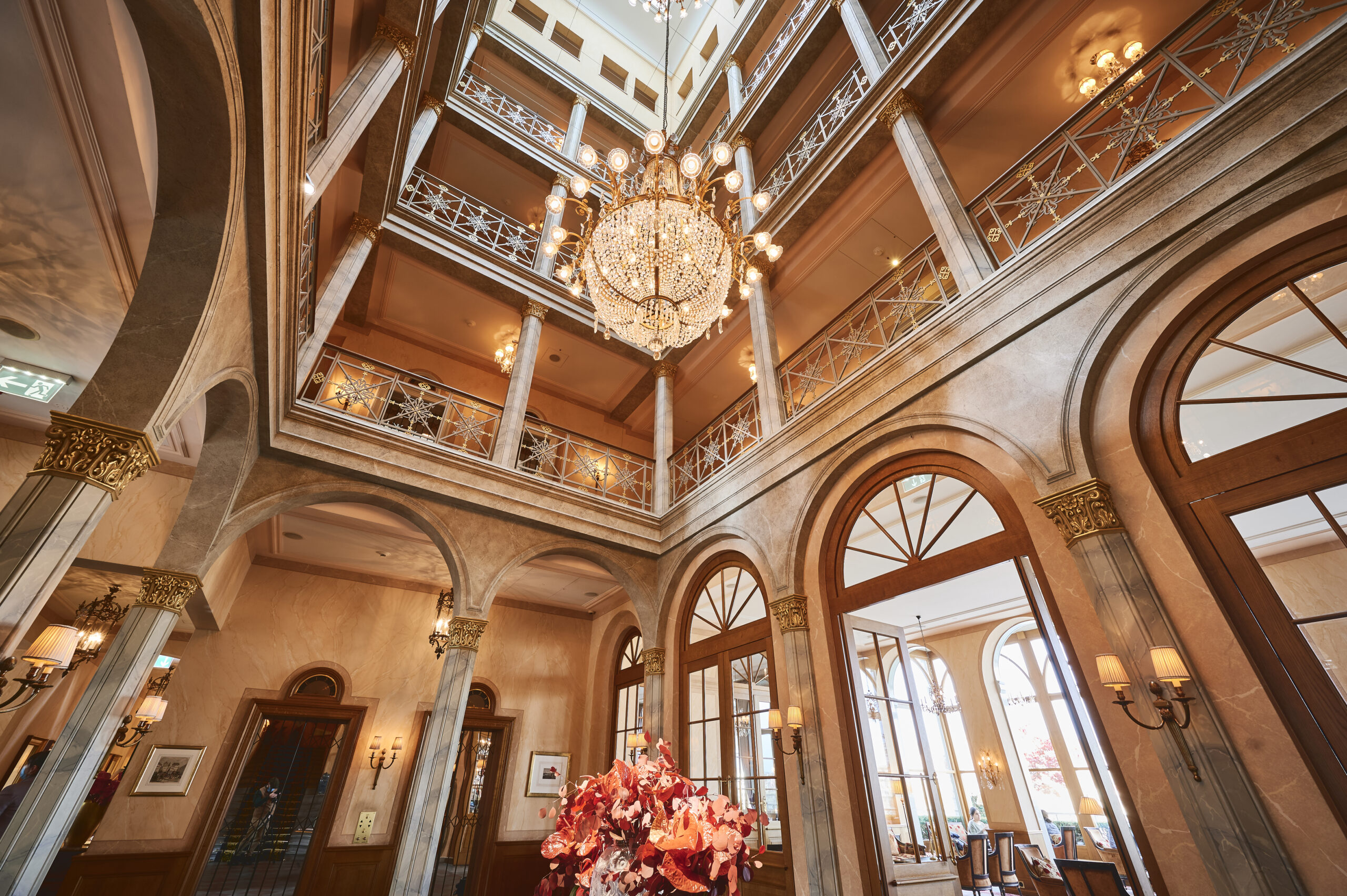
Once the doors of the building dating from 1555 are pushed open, it is a timeless place that awaits visitors and that instantly plunges them into another era full of history. The singing sound of the fountain and the crackling of the large fireplace instantly transport the visitor into another world, a distant, historical one, that of the Geneva of yesteryear. On the ground floor, a large mural recounts the history of the city; Mr. Favre had entrusted this project to a few young student painters from the region, whose mission was to place the city’s well-known buildings in an imaginary setting, inspired by beautiful Venice. For this reason, the fresco tells the story of a timeless Geneva where characters and monuments from different eras cohabit. We find the Salève, the St-Pierre cathedral, the Grand Theater or the Hôtel de la Cigogne, with its feet in the water.

Photo : @Adrian Ehrbar

The original woodwork, works of art and refined furniture create a warm and welcoming atmosphere, where each element is steeped in history, such as the Louis XII, XV and XVI armchairs, or the original 19th century tapestries. On the first floor, the 50 tastefully furnished rooms have also been designed with great attention to detail, to offer guests a cosy, upmarket welcome for an exceptional stay.

Photos : @Adrian Ehrbar

Tasty seasonal dishes can be enjoyed in the sumptuous décor of the Restaurant de la Cigogne. Originally a simple drinks bar, the restaurant was transformed into a chic brasserie in the 1980s, and finally became a renowned gastronomic restaurant at the beginning of the new millennium. However, traces of its past history can still be seen, including the original bay window and the central doorway that once served as the restaurant’s entrance. The combination of the rustic, imposing mahogany woodwork and the fine tableware lends the room an elegant and delicate atmosphere.

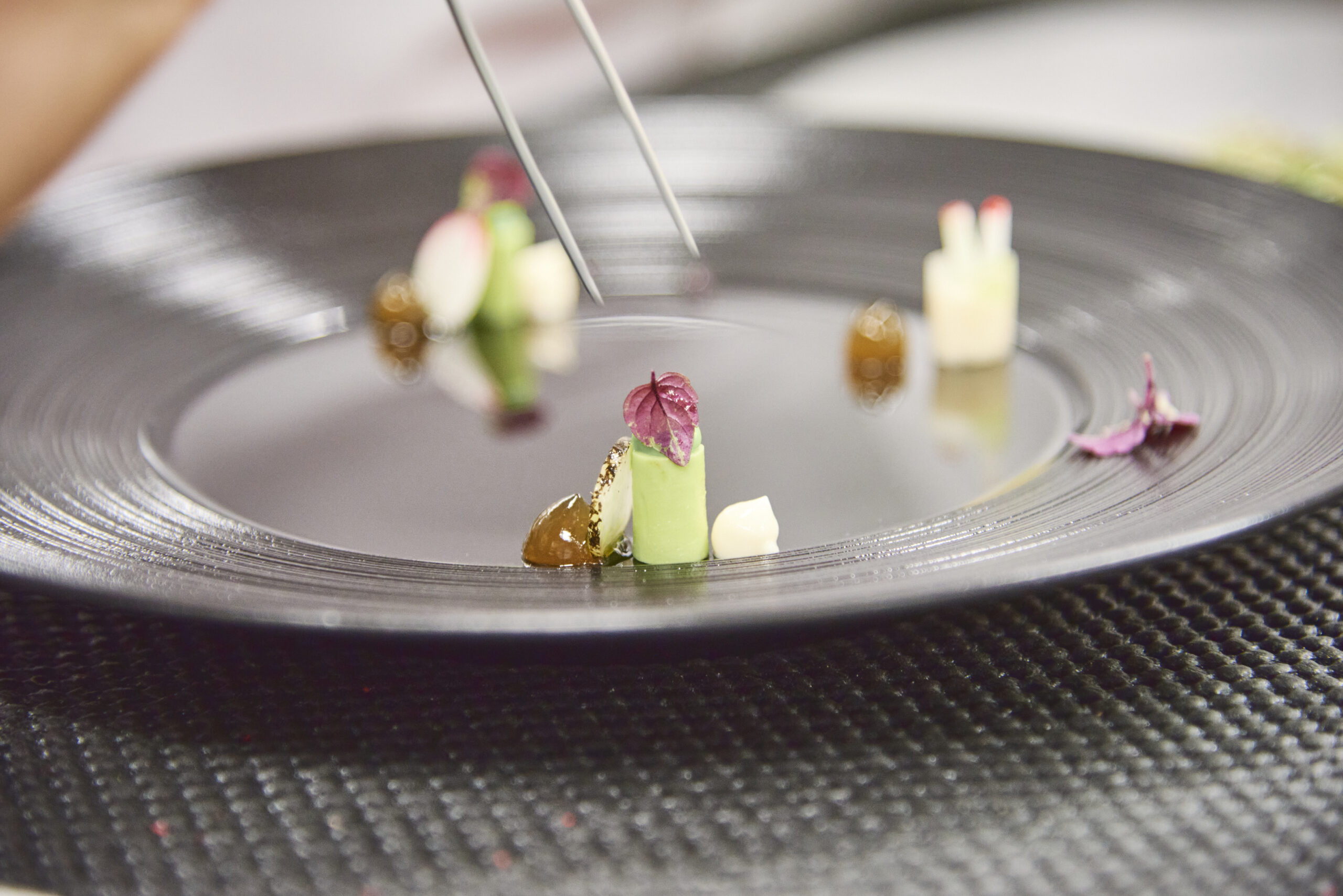
The cuisine reflects the hotel’s image: simple, refined and modern, while remaining steeped in tradition. Chef Nicolas Pasquier draws all his creativity from the original raw product, and is inspired by his visits to the market and the seasons to create exceptional dishes, always with passion and in search of perfection.

Photo : @Adrian Ehrbar

In 1997, Mr. and Mrs. Favre also became owners of the Hotel Longemalle, located right next to the Hotel La Cigogne. The second establishment was also modernised, this time in the spirit of a chic boutique hotel, with design decorations and bright colours. This is how the fabulous Longemalle Collection story began.

Three generations later, the Favre family is still as attentive to the needs and requirements of its clientele and is very attached to the two hotels. Their objective: to offer unique emotions in two exclusive locations in the centre of Geneva, thus creating memories that will last forever.

All information and reservations are available on the websites of both hotels: https://www.longemallecollection.com

Photos : @Adrian ehrbar

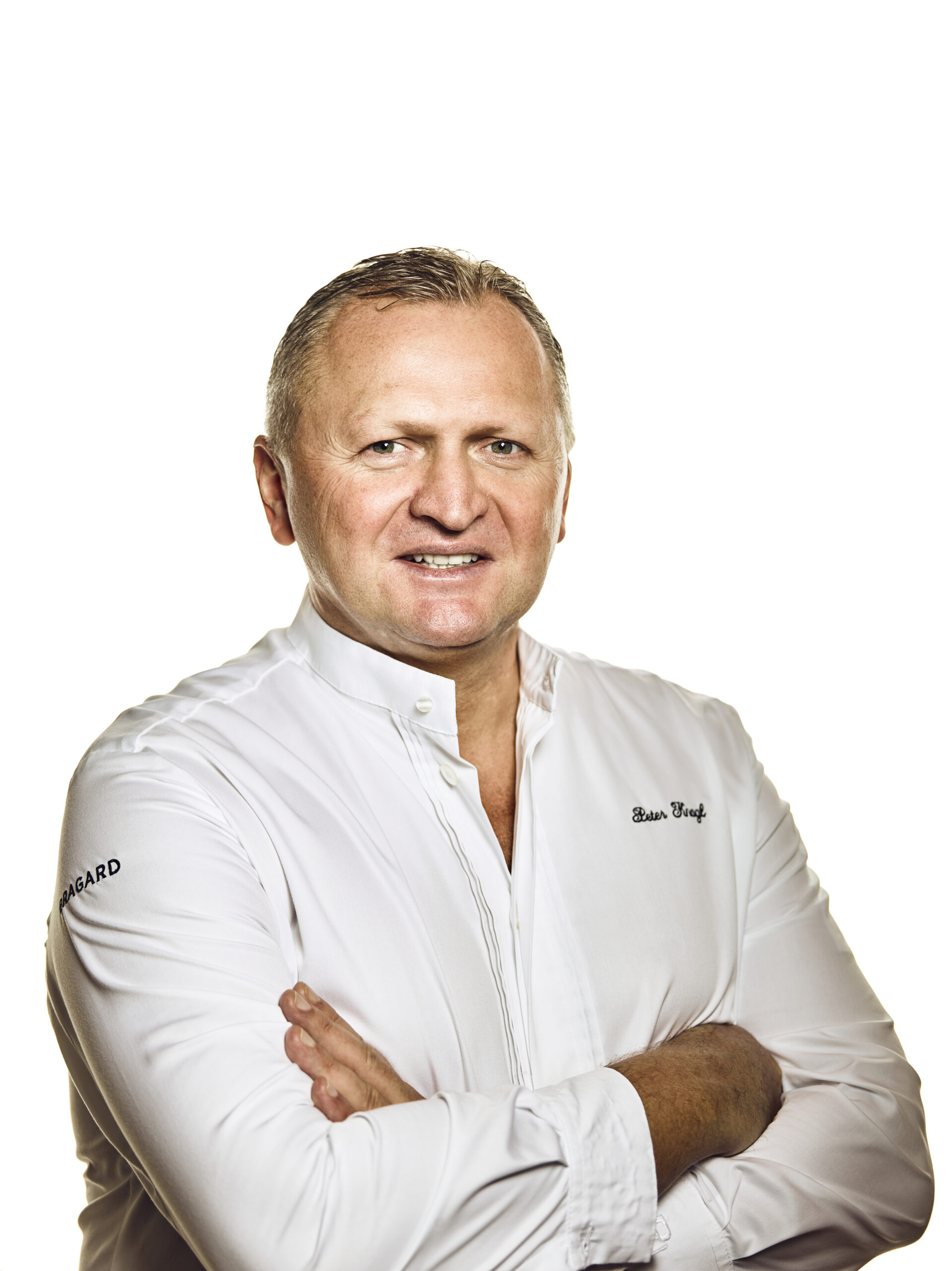
Around the world with Peter Knogl

Peter Knogl, the three-starred chef of the restaurant Cheval Blanc at the Grand Hotel Les Trois Rois in Basel (19 points in the GaultMillau), constantly surprises his guests with the creativity of his culinary creations. Largely inspired by world cuisine, the chef likes to bring together different cultures on the same plate, promising a journey full of aromas and flavours. Escape into the gastronomic world of Peter Knogl by reading our interview.

Photo : @Adrian Ehrbar

Grandes Tables Suisses: Which exotic inspiration can we discover in your new menu?  

Peter Knogl: A new Amuse Bouche: Macaron cumin/melon/sardine.  

GTS: We often talk about travel as a source of inspiration for chefs; what is the trip that has most marked your life and why?

PK: It was a trip to Tokyo in 2010, where the culture and quality of the products inspired me a lot. A great experience was the local fish market.

GTS: Your cooking has Asian notes; what is your favorite Asian cuisine and which dish do you particularly like and why?

PK: The Japanese products and the Umami flavour inspire me every time anew. I cannot express this with a special dish. I also like Thai cuisine, especially the reduction to the essentials is what makes it so special to me.

GTS: What is your signature dish inspired by Asia?  

PK: Wagyu, as a Japanese product – with a beef jus with Asian flavours. Thus both continents find perfect harmony.

GTS: What other world cooking inspire you and why?  

PK: Thailand interests and attracts me very much because of its variety of flavours, perfumes and spices.  

GTS: Mediterranean cooking also often appears in your dishes, tell us what this cooking brings to your dishes?  

PK: I have lived and worked in Mediterranean countries for 10 years, therefore this region fascinates me a lot. Especially the lightness of the dishes, which the Mediterranean cuisine has to offer.

GTS: Why mixing Asian and European cooking is so interesting in terms of flavors?  

PK: Asian cuisine is light, reduced to the bare essentials and brings the Umami note, while the European cuisine provides the classic touch. We combine both together in one dish.  

GTS: What is the cooking that you have not experimented yet in your dishes, but you would like to explore?  

PK: Peruvian cuisine! I would like to travel to Peru one day, if this is possible again.  

Cheval Blanc restaurant at the Grand Hotel Les Trois Rois is is fully open from Monday 31 of May. Find all the information on their website :

https://www.lestroisrois.com/en 

https://www.chevalblancbasel.com/en

Photo : @Adrian Ehrbar

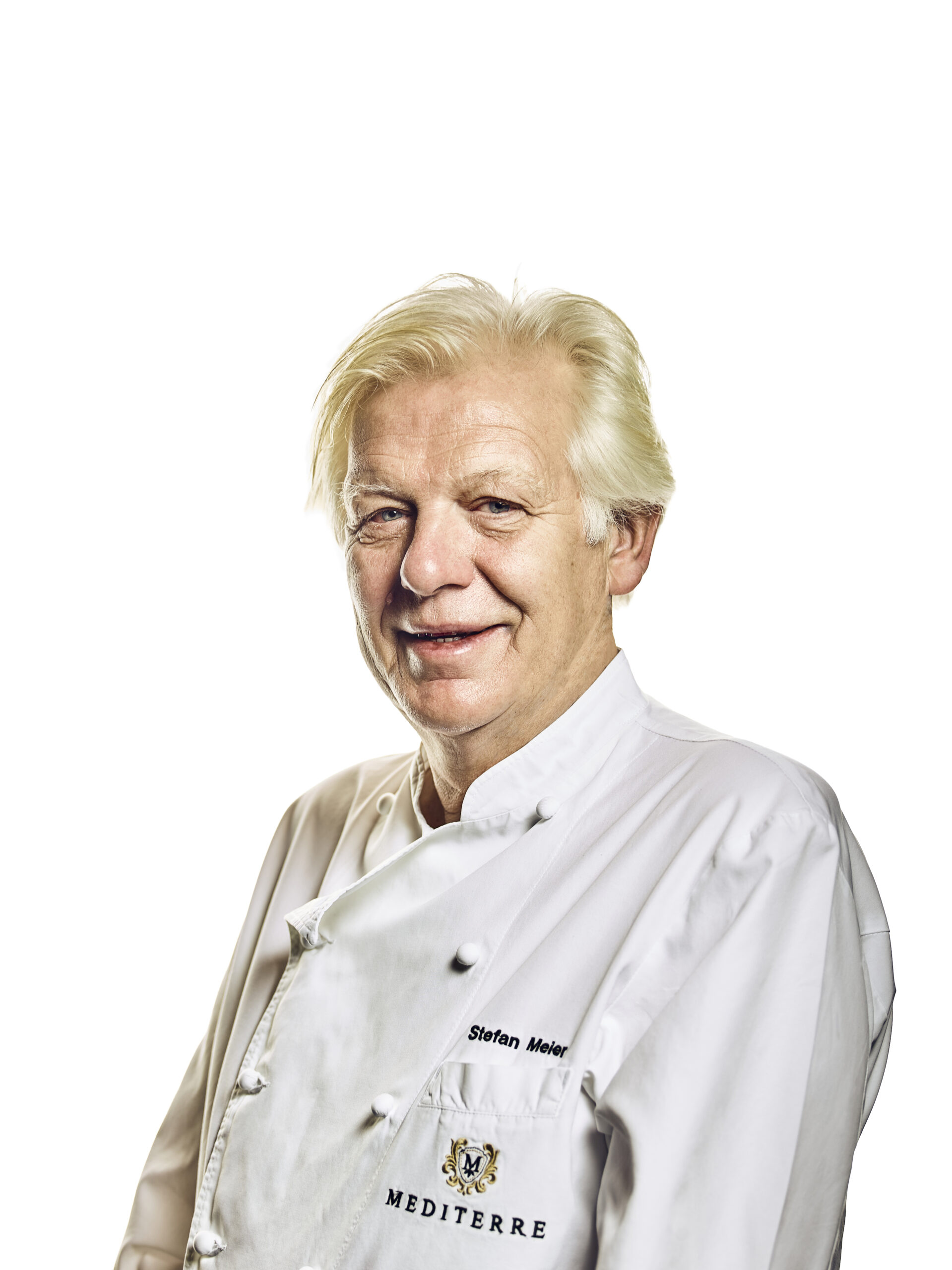
Stefan Meier’s recipe

How about a trip to Brittany for a meal? That’s what Stefan Meier, the starred chef of the Gasthaus Rathauskeller restaurant in Zug, proposes with his recipe for Breton Bouchot mussels with sepia noodles. A gastronomic creation that promises an exceptional taste journey.   

Photo : @Adrian Ehrbar

The recipe (for 4 people)  

Ingredients

  • 1200 g bouchot mussels
  • 120 g cuttlefish noodles
  • 1 tomato, diced
  • 1 clove of garlic, halved, germ removed
  • 1 small bunch of Italian parsley
  • 1 small carrot, peeled and cut into thin strips
  • 1 leek, cut into thin strips
  • 100 g butter at room temperature
  • 1 dl olive oil
  • salt and pepper

Bouchot mussels: Cook for 9 minutes at 100 degrees steam  

Carrot and leek strips: cook for 2 minutes at 100 degrees steam  

Preparation

  • Rinse the Bouchot mussels well in cold water.
  • Drain and steam according to instructions.
  • Remove from the cooking chamber and drain the mussels in a colander.
  • Collect the stock in a saucepan.
  • Remove the mussels and set aside.
  • Put the stock in the pan on the hob with the butter and olive oil.
  • Season with salt and pepper and set aside.
  • Steam the carrots and leeks according to the instructions.
  • Remove from the cooker, drain well and add to the clam sauce.
  • Set aside.

Preparation of the cuttlefish pasta   

  • Cook the cuttlefish pasta in sufficient salted water on the stovetop until al dente.
  • Drain in a colander and twist four nests with a meat fork.
  • Set aside.

Dressing  

  • Bring the mussels to the boil with the mussel sauce, diced tomatoes and parsley and add the garlic.
  • Divide between 4 deep plates.
  • Place the sepia noodle nests on top.

Enjoy!

Find all the information about the Gasthaus Rathauskeller restaurant on their website: https://rathauskeller.ch/68/ 

The history of a myth

Franck Giovannini, three-star chef of the Hôtel de Ville in Crissier, has not skimped on work in recent months since he has created a room dedicated to the history of this legendary establishment. A place of transmission from great chefs to great chefs.  

Picture : @Adrian Ehrbar

Grandes Tables Suisses: How did you imagine this room dedicated to the history of the restaurant?  

Franck Giovannini: I’ve been thinking about it for a while, I didn’t want it to be just photos, I liked the idea of having menus through time, newspaper articles, awards or even dishes dating from the Frédy Girardet era. For example, I found a menu from 1969 in which you can see that Frédy Girardet was starting this shift towards gastronomy with sole or langoustines. Moreover, he readily recounts that in 1968, he visited the chefs Bocuse and Troisgros and felt that a movement was being created in the world of high gastronomy. He came back with the idea of developing cuisine in Switzerland as well. So in the 1970s, he began this shift by creating his first menus.  

GTS: Did you find any previously unknown elements?  

FG: I was able to trace the history of the House. In 1928, they broke up the Maison Communale to build the present building.  I found the original hand-drawn plans of great precision. We discovered that there was the post office on the first floor and the apartment of the letter carrier on the top floor. The house has grown over time. It’s quite amazing to discover how many details, photos and objects we were able to find through the archives of the Town Hall, family, relatives and clients. I also had the Swiss mountains carved out of a tree trunk with the key dates of the House. From the beginning with Benjamin Girardet in 1955 to the present day in order to pay tribute to the mythical history of the place.

GTS: What was Mr. Girardet’s reaction when he discovered this piece?

FG: He was moved. At the beginning, we explained the process to him and he quickly got into the game by giving us material to move forward.  

GTS: How will you use this space?

FG: We don’t want to make it a table d’hôte, but rather a meeting place for companies who want to have meetings before or after a meal. But it’s also a place where you can have an aperitif. The goal is to keep this space friendly.  

GTS: Today, after months of work, what do you think of this museum?

FG: I am very happy to see all that we have been able to gather and what the enthusiasts and friends have brought back. And I am sure that it is not finished, because many elements will be added as time goes by. The goal is for this space to constantly evolve. We are proud and moved to have built, sorted and cut out all these moments of the past ourselves that remain engraved in our memories. But most of all, I am happy that a positive and joyful feeling comes out of this space, as our goal is to keep the craftsmanship and excellence of this legendary house alive!

More information about the establishment: https://www.restaurantcrissier.com/